The Cinema Interval, Before the Next Reel
The cinema interval can shape a screening into a shared outing, making room for a foyer visit, a quiet conversation and a considered return to the film.
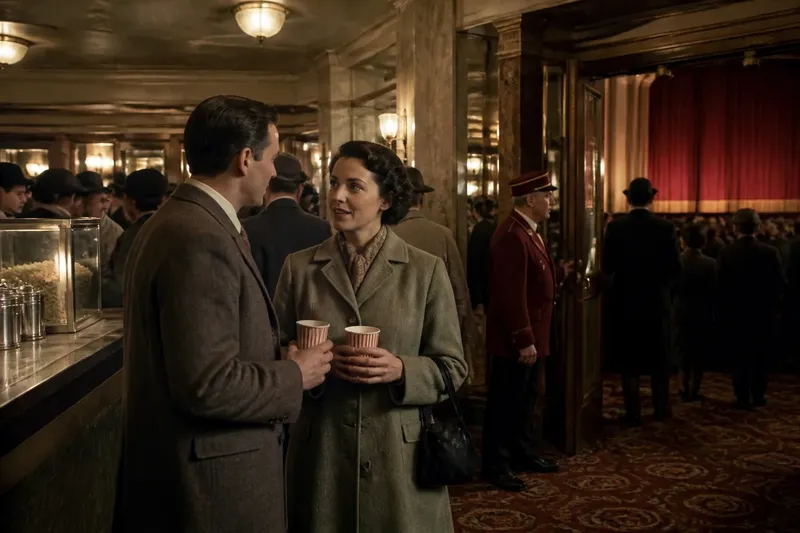
The common mistake is to treat the cinema interval as dead time between two parts of a film. That overlooks what a pause could make possible: a drink, a brief conversation or a moment to leave the auditorium. In some cinemas and periods, the interval also accommodated reel changes; elsewhere, its role depended on the programme and the venue.
Why did some cinemas include an interval?
There was no single reason for every interval. In screenings using separate reels, a pause could give projection staff time to change reels. It also offered viewers a chance to stretch, visit the facilities or buy refreshments, particularly during a long programme.
Some screenings ran without a break, while others treated one as part of the evening’s format. The custom varied with the film, the cinema and local practice. Where an interval was expected, it could make a screening feel like a social outing as well as a period of concentrated watching.
An interval might begin for practical reasons, but its meaning to viewers depended on how that cinema organised the pause and what its audience did with it.
How did the pause become part of the cinema visit?
In cinemas that scheduled an interval, the shift from darkness to movement gave the audience a clear change of pace. Lights might rise, and viewers could leave their seats for the foyer or corridors. Ushers or other staff might help guide people back, though the arrangements differed between venues.
Conversation, too, depended on the setting. A pause gave viewers an opportunity to comment on a scene or speculate about what might follow, without talking over the film. It did not mean that every audience behaved alike; some people preferred to remain seated and keep their attention on the story.
Say a couple at an invented long screening has just watched a tense scene. During a scheduled interval, they step into the foyer, exchange a guess about what may happen next, then return after a staff announcement. The observable result is a visit with a pause for shared talk; the story itself remains unchanged.
What could viewers do during an interval?
The available choices depended on the building, the crowd and the time allowed. A roomy foyer could offer space to meet companions, while a compact cinema might leave little room beyond the entrance and aisles.
- Stretch and move: If you have been sitting and the aisles are clear, stand or take a short walk; if movement is awkward, remain seated and stretch gently in place.
- Visit the foyer: If there is room to move through the crowd, step out for a change of scene; if the passage is congested, stay clear of it and remain in the auditorium.
- Buy a refreshment: If the queue looks manageable and the break allows time, visit the counter; if it is long, skip the purchase rather than risk missing the resumption.
- Speak with a companion: If you want to share a reaction, keep the conversation brief and away from people who are watching the screen; if you would rather preserve the mood, stay quiet or remain in your seat.
- Read a programme: If a printed programme is available and you want more context, look it over; if you wish to avoid plot details, leave it unread until after the screening.
- Stay in the auditorium: If you prefer not to leave, remain in your seat; if you need to use the facilities, check the staff’s directions and allow time to return.
There was no single required ritual. The range of possible actions was shaped by the venue and the audience.
Did every screening have an interval?
No. A cinema’s programme and the way a film was presented could determine whether a break was included. A longer screening might be divided into sections, while a shorter programme could run continuously. Some venues also chose to keep the audience with the film without a pause.
The difference changes the shape of the visit. With an interval, attention is interrupted and then gathered again; without one, viewers generally wait until the screening ends to visit the foyer or buy refreshments. Neither format is inherently better. Each sets a different rhythm for the audience and the cinema staff.
How did audiences know the interval was ending?
Arrangements varied by cinema. An announcement, bell or change in the auditorium lights could serve as a signal, but none should be treated as universal. Viewers might gather their belongings, find their seats and settle as the room darkened again. Staff attended to the room and the screening, with the practical details depending on the venue.
The return marked a transition from the social space of the foyer to the shared focus of the screen. A pause between scenes could leave viewers recalling where the story had stopped, but the interval did not necessarily change the film’s meaning.
What do people ask about the cinema interval?
Was the cinema interval always for changing reels?
No. In screenings using separate reels, a break could accommodate a reel change, but cinemas also included intervals for other practical or programme-related reasons. The purpose varied between screenings and venues.
Could viewers leave the auditorium during an interval?
In cinemas that scheduled a break, viewers could often use the pause to step into the foyer or visit the facilities. The available space and time differed, and some people chose to stay in their seats.
Did an interval mean the film was shown in two parts?
An interval could divide a screening into sections, but the pause itself did not alter the film. It marked a break in the presentation, after which the screening continued.
Why did an interval feel different from pausing a film at home?
A cinema interval took place among other viewers, in a venue arranged for a shared screening. The movement out of the auditorium and back could make the pause part of the public occasion, though each viewer experienced it differently.
Why might viewers remember the interval with the film?
A cinema visit includes surroundings and encounters as well as images on a screen. A foyer conversation, the rise of the lights or the sound of an audience returning may become attached to a viewer’s memory of the film. A pause can also leave an unresolved scene in mind while the everyday setting briefly comes back into view.
That memory is personal, but the interval, where one was scheduled, was shared in a way a pause at home usually is not. Viewers made the same temporary shift from story to surroundings, then returned to the film with different thoughts.
How did the cinema interval shape the evening?
Where a cinema included a break, a visit might move from arrival and settling to concentrated watching, then to a social pause and a return to the film. Moving through the foyer and corridors made the building part of the experience, rather than simply a place to sit in darkness.
The cinema interval could therefore be both a break in the programme and a part of its rhythm. When reading an older account of a screening, note whether it mentions an interval and any details about the venue. Those clues can suggest how that particular audience moved, talked and waited before the film continued.