Why Picture Houses Give the Entrance a Grand Gesture
A picture house entrance turns an ordinary street arrival into a shared cinema experience, helping visitors understand where to pause, gather and go next.
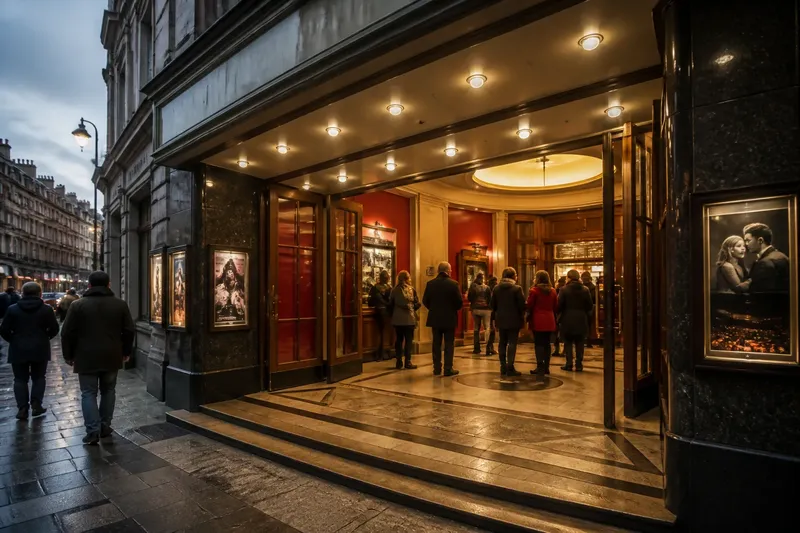
The common mistake in reading a picture house entrance is to treat it as decoration around a door. A grand entrance does more: it changes the pace of arrival, and a poorly understood threshold can leave visitors unsure where to wait, meet or enter. The architecture turns the move from street to auditorium into the first shared act of going to the cinema.
Why does a cinema entrance feel like a threshold?
A threshold is a space of change, not simply the line beneath a door. On the pavement, people are moving through separate errands and conversations. Inside a foyer, they begin to share a destination. The entrance makes that shift legible through changes in scale, light, sound and direction.
A projecting canopy, recessed doorway or broad set of doors can mark a pause before entry. Once inside, a foyer may widen, rise or turn away from the street. These changes tell visitors, without a sign, that they have left ordinary pavement circulation and entered a place designed for gathering.
The gesture need not be monumental. A modest vestibule can create a distinct pause if its doors, flooring and sightlines make the sequence clear. The important point is that arrival feels like a passage rather than an accidental step indoors.
What does a grand gesture actually do?
In architecture, a grand gesture is a feature that gives an approach emphasis and direction. It might be a tall entrance arch, a deep porch, a central doorway or a bright view into the foyer. Such features make the building recognisable from the street, but they also organise how people approach it.
Scale is one tool. A high ceiling can make the entrance feel ceremonial, while a lower vestibule followed by a taller foyer can heighten the sense of arrival. Light is another: daylight at the doors may give way to warmer interior lighting, making the foyer feel separate from the street even before visitors reach the auditorium.
These effects work best when they support movement as well as atmosphere. A dramatic doorway that is hard to locate, or a striking foyer with an unclear route onward, asks visitors to solve the building instead of simply entering it.
How do the foyer and doors shape arrival?
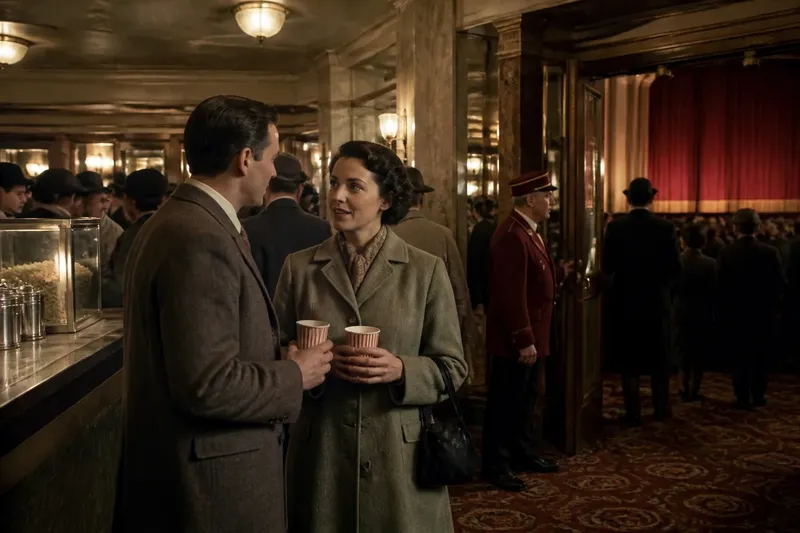
The foyer is the part of the sequence where arriving groups can gather and orient themselves. Its layout may offer a view towards a box office, a stair or a corridor, so a visitor can see the next destination before choosing a route. Even when the space is busy, visible destinations reduce the feeling of being in the way.
Doors regulate the transition. A pair of outer and inner doors can soften street noise and create a small holding space; a single broad entrance may make the passage feel more direct. The arrangement also affects whether people coming out can pass those entering without awkward crossings. These are social decisions built into the plan, not just details of appearance.
Imagine a small picture house where the street door opens directly into a narrow passage, but the foyer lies around a corner. If the operator places clear signs at the turn and leaves the sightline open, arriving visitors can find the gathering space without blocking the doorway. The expected result is a calmer entrance, even though the building itself has not changed.
What should a visitor notice in a cinema entrance?
Look at the sequence rather than judging one feature alone. Notice how the building catches attention from the pavement, where the first pause happens and what the foyer reveals next. These details help explain why two cinemas with similar auditoriums can feel quite different before the film begins.
- Approach: Does a canopy, sign or change in the façade make the entrance easy to recognise?
- Door position: Is the doorway set back, flush with the street or reached through a porch?
- First view: From the door, can visitors see where to gather or ask for help?
- Change of atmosphere: Do light, ceiling height or floor material mark the move indoors?
- Shared movement: Is there room for people to pause without obstructing those passing through?
One feature may answer several of these questions. A recessed entrance, for instance, can protect the doorway from weather and create a sheltered place to wait. Its architectural meaning comes from how it joins the street, the foyer and the movement of people.
How do different entrance forms change the experience?
A street-level entrance offers a direct relationship with its surroundings. It can make the cinema feel open to the neighbourhood, especially when the foyer is visible through glazing. The trade-off is that street activity remains close, so the transition may feel less secluded.
A deep porch or vestibule creates a more gradual arrival. Visitors pass through an intermediate zone before reaching the main foyer, which can feel deliberate and sheltered. But if the space is dark or its inner doors are difficult to identify, the same depth can make the entrance feel uncertain.
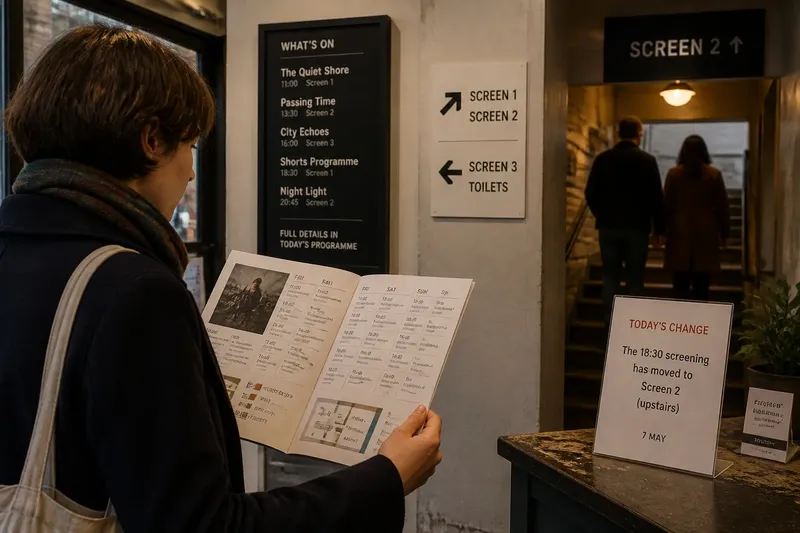
Some picture houses place a stair or upper landing in the arrival sequence. This adds a change of level and can make the foyer feel more formal, but it also means the building’s welcome depends on an accessible route that is easy to find. The architecture should communicate more than one way into the shared space.
What questions help explain a cinema threshold?
Why are some cinema foyers set back from the street?
A setback creates room between pavement and interior, giving visitors a place to pause before entering the main foyer. It can also make the entrance more visible by framing the doors within a recess.
Why does a tall foyer feel more ceremonial?
Extra height changes the scale of the visitor in relation to the room and draws attention upward. When paired with a clear route onward, that sense of occasion supports rather than distracts from movement.
Do glass doors weaken the sense of arrival?
Not necessarily: glass can show activity inside and help visitors understand where the entrance leads. The threshold still feels distinct when the frame, lighting or foyer beyond gives the doorway a clear architectural role.
What makes an entrance feel confusing?
Confusion often comes from a mismatch between the apparent entrance and the route visitors must take after crossing it. A blocked view, competing doors or an unclear change of level can interrupt the sequence from street to foyer.
Why does this first transition matter to cinema culture?
A cinema visit begins before the auditorium. The entrance gives strangers a shared point of arrival, while the foyer turns separate journeys into a common gathering. Architecture cannot dictate how people feel, but it can make the transition from public street to collective attention easier to read.
That is why the grand gesture is not merely a façade flourish. In a picture house, the entrance and foyer establish the terms of welcome: where to pause, how to find the next space and how to join others. Read the threshold as part of the cinema’s social design, and the picture house entrance becomes easier to understand.